Slingshot Your Way to
Secure, Efficient AI solutions
I have always been fascinated by the ellipse-trail
manoeuvres of a gravity-assisted slingshot in rocketry. Somehow it feels
comparable to how we reach our goals in the AI-solution world, moving from a
start point to a target destination.
https://www.scientificamerican.com/article/how-does-a-gravitational-slingshot-work/

A gravitational slingshot leverages every planet in its path
— using each body’s gravity to gain momentum (saving fuel in the process) —
until the spacecraft is flung toward its destination. The starting point is
analogous to our problem statement, and the destination is the target state we
wish to achieve with AI Agents. The smarter the agents, the greater the
efficiency, the less compute “fuel” burned, and the faster we reach the final
solution.
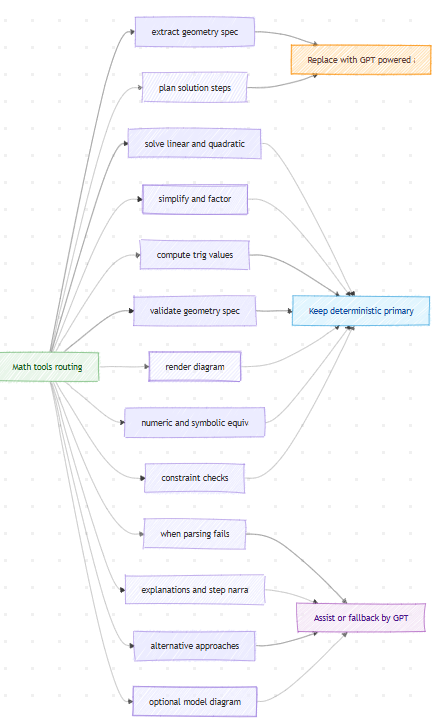
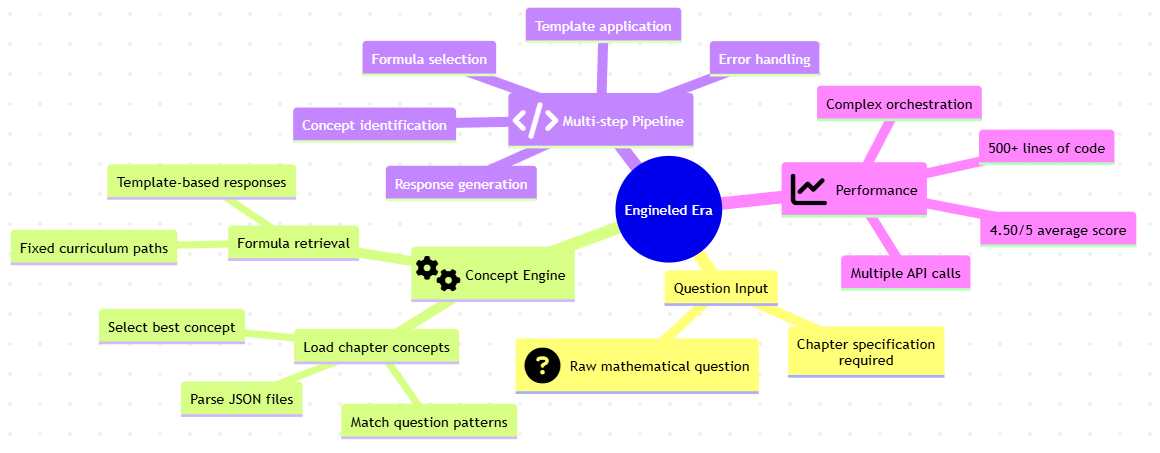
At first, I was fascinated with how a newer model can eliminate so much code
and iteration in your agents. Then the more I dug into the code, the more it
became clear that every “pass” at an LLM can actually be broken down better
— either into multiple passes or via logical checkpoints — which I refer to as
a functional scaffold. This scaffold supports the final outcome and can
also optimise efficiency.
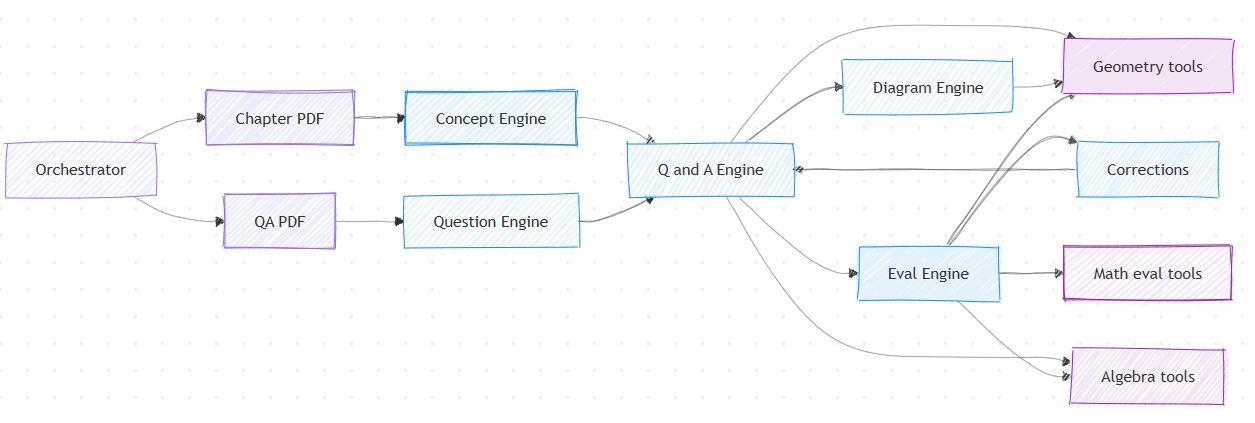
For example — if you look at the checkpoints in a flow for math chapters (note:
this is not an agentic AI flow, but simply a way to highlight
scaffold-layers):
Math-Specific Layers
|
Layer |
Purpose |
Example |
Confidence Impact |
|
Concept Match |
Identify formula type |
“Area calculation →
πr²” |
+25% |
|
Formula Apply |
Execute
calculation |
“π × 5² =
25π” |
+30% |
|
Step Validate |
Check each operation |
“25π ≈ 78.54” |
+25% |
|
Answer Verify |
Reasonableness
check |
“~79 cm²
reasonable for r=5” |
+18.6% |
|
Total Math
Confidence: 98.6% |
|||
Science-Specific Layers
|
Layer |
Purpose |
Example |
Confidence Impact |
|
Concept Match |
Scientific principle |
“Acid + Base →
Neutralization” |
+20% |
|
Principle Apply |
Core
mechanism |
“H⁺ + OH⁻ →
H₂O” |
+20% |
|
Context Link |
Real-world connection |
“Stomach acid +
antacid” |
+20% |
|
Cross-Concept |
Multi-principle
integration |
“pH + Salt
formation” |
+20% |
|
Synthesis |
Holistic understanding |
“Complete reaction
overview” |
+15% |
|
Total Science Confidence: 95% ✅ |
|||
It’s worth noting that most commercial LLMs do not
give you full insight into their internal activations or operations. As of this
writing, typical application developers have access to chat/completion
endpoints, embeddings, and fine-tuning, but not raw hidden states or
full layer-wise activations.
Without visibility into how the model formed its reasoning,
we cannot safely assume a single pass will result in a correct or explainable
answer. By architecting a multi-pass scaffold (concept check → tool call →
validation → final synthesis) we overlay structured checkpoints on top of the
opaque core, thus improving confidence, traceability and security.”
|
Observed Constraint |
Implication for Agent Design |
Scaffold Response |
|
Hidden states not
exposed (e.g., no layer-wise activations) |
Limited introspection
/ difficult tracing of internal reasoning |
Introduce validation
layer: intermediate “why”-checks, tool invocation logs, state snapshots |
|
Single large prompt → output |
Risk of error
propagation without checkpoints |
Break task
into smaller passes, each with a purpose (concept match, apply, validate…) |
|
Model behaviour may
vary / unknown |
Hard to guarantee
correctness or controllability |
Use scaffold
architecture to impose governance: checkpoints, tool boundaries,
human-in-loop where needed |
These constraints strongly reinforce the need for
structuring internal workflow via scaffold rather than relying on a monolithic
prompt, or even an ‘Agentic’ architecture.
Bridging to Agentic Architecture: Why Scaffolding Still Matters
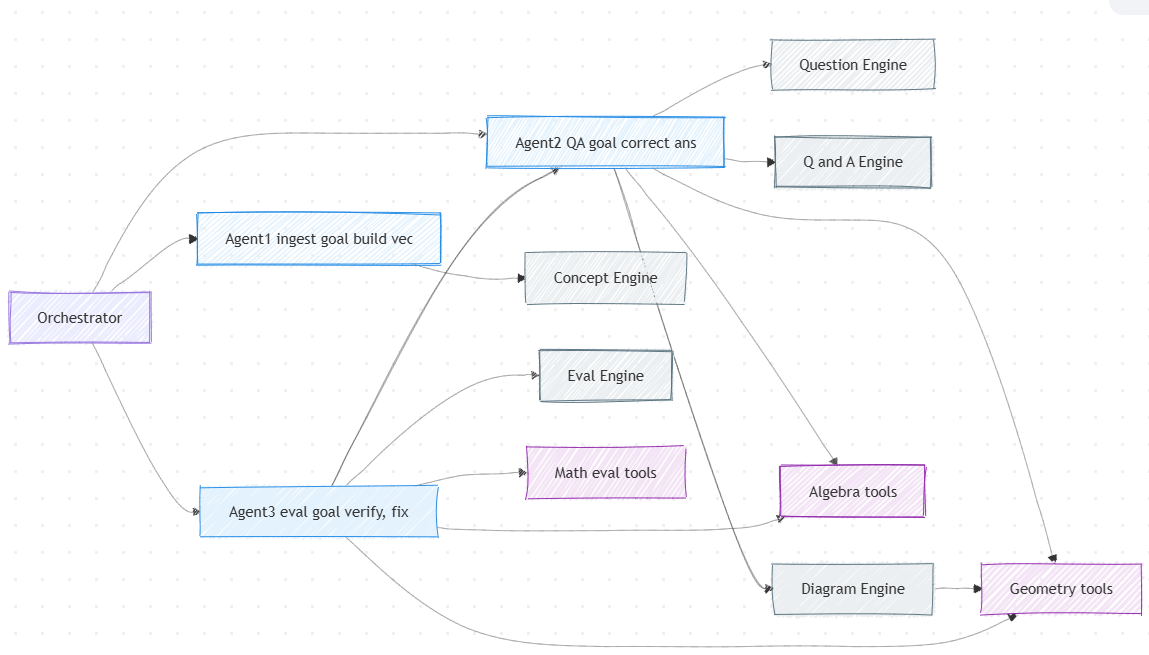
When your architecture evolves into a truly agentic system —
where the underlying model not only responds to prompts but decides on
tools, sequences, sub-agents and logic flows — the notion of functional
scaffolding doesn’t vanish. In fact, it becomes even more essential.
Agentic systems (or “multi-agent” systems) are defined by autonomous agents
that perceive, reason, plan, act, communicate and delegate within complex
workflows. Because of this autonomy, the degree of unpredictability and the
potential for error increase significantly. And since the core model remains a
black box — hidden states and internal reasoning remain inaccessible to most
developers — we cannot simply hand off the task and hope for the best.
That’s exactly where the functional scaffold steps in. By
embedding structured checkpoints, validation layers and oversight boundaries
around agentic flows, you ensure that autonomy does not turn into errant
behaviour, drift, or uncontrollable complexity. Consider a typical agentic
sequence: the system decomposes the goal into subtasks, selects tools, hands
off to sub-agents, aggregates outputs, synthesises results and returns a final
answer. At each of these junctures there is an autonomous decision being made —
and without scaffolding you risk incorrect subtask decomposition, wrong tool
calls, uncontrolled cascades or hallucinations.
Here’s how the scaffold maps to agentic stages:
|
Agentic Stage |
Autonomy & Risk Snapshot |
Scaffold Response |
|
Task decomposition
& plan generation |
Agent chooses subtasks
and order |
Decomposition
checkpoint: agent explains plan → review |
|
Tool/sub-agent invocation |
Agent selects
tools or sub-agents |
Tool-choice
validation: confirm tool appropriateness |
|
Sub-agent execution
& output |
Sub-agent acts with
limited supervision |
Output validation
layer: verify result correctness |
|
Final synthesis & decision |
Agent
aggregates and presents answer |
Final verify:
check alignment, completeness, reasonableness |
Even when the underlying model appears intelligent enough to
“figure things out,” you simply cannot rely on opaque internal states. As many
enterprise observers note, agentic AI introduces new observability, governance
and monitoring burdens. Without checkpoints, you are essentially trusting your
system blindly. With scaffolding, you maintain control and traceability.
In the gravitational slingshot metaphor, you might be
tempted to simply “fire the agent” and let inertia carry it home. But as your
solution becomes agentic — with multiple bodies, interactions and
decision-points — you definitely need mid-course corrections, validation orbits
and safe checkpoints. The functional scaffold becomes those control-points that
steer, correct and validate the trajectory when the “mass” you’re launching is
far more complex than a single monolithic model.
Summary
Agentic systems don’t remove the need for scaffolding—they
amplify it. The more autonomy, tools and agents we allow, the more governance,
validation and structured scaffolding we must embed to ensure reliability,
security, traceability and efficiency.
Key Focus Areas
- Decompose
workflows into discrete passes that can be validated (and which may in
some cases require human intervention).
- Embed
“mini-checkpoints” — not only for audit trails, but to gain deeper
insight into how largely black-box models behave from the perspective of
an application developer.
- Build
observability and security checkpoints on top of those
mini-checkpoints, so your AI solutions remain granular, fine-grained and
auditable.